


African dancehall is not an imitation of Jamaican dancehall. It grew out of it, absorbed it, and over time became something distinct: shaped by the specific rhythms and realities of West African street life, performed in languages and creoles that the originators of the form could not have imagined, and increasingly influential on the very genre from which it drew its initial inspiration. In 2026, Ghanaian dancehall in particular, with Shatta Wale and Stonebwoy at its centre and a growing community of artists around them, is a self-sustaining creative tradition. These ten songs are the ones that made that tradition visible and that continue to define what it sounds like when African dancehall is operating at its best.
1. Gringo – Shatta Wale featuring Sarkodie
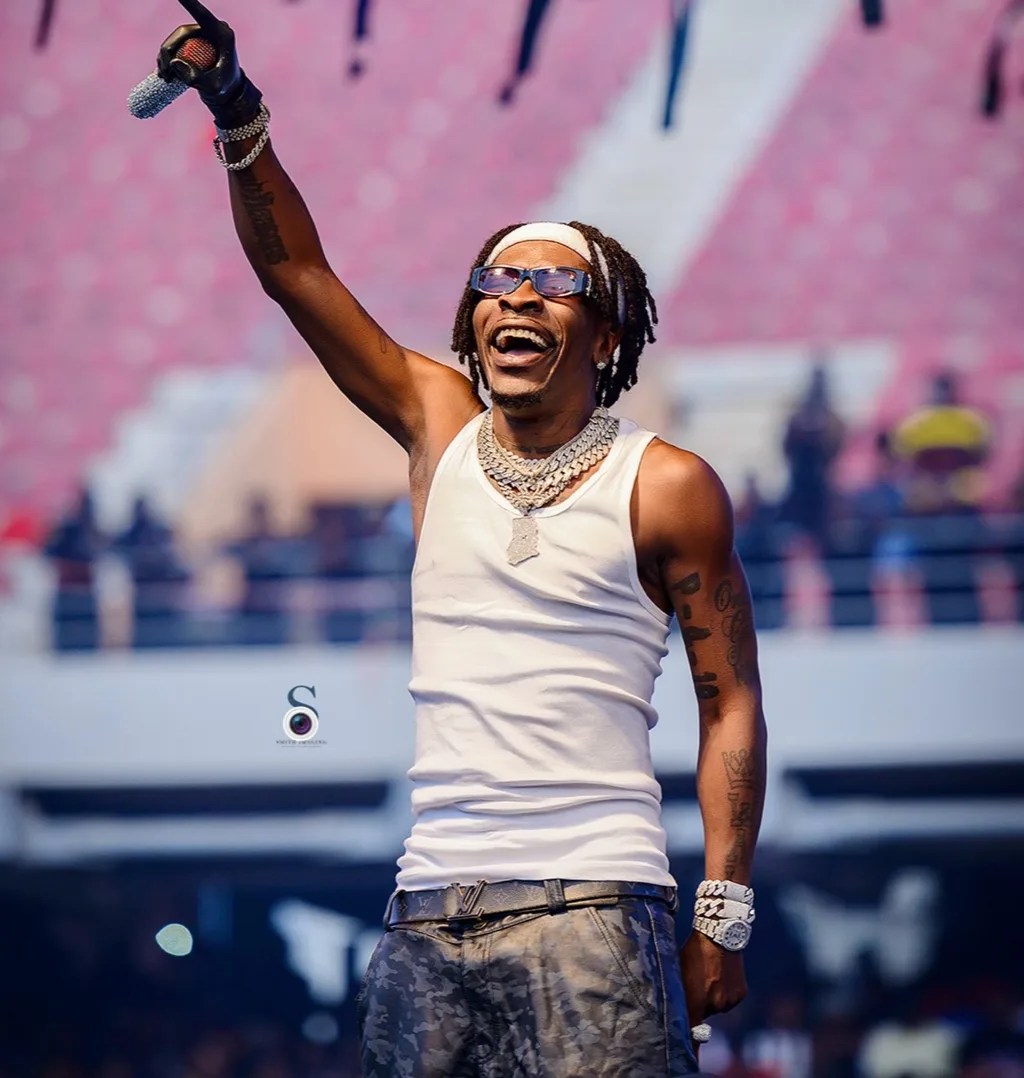
There are songs that feel like they arrived at exactly the right moment, capturing a particular energy in a particular place at a particular time, and “Gringo” is one of them. Shatta Wale’s hook was irresistible in the way that the best dancehall always is: simple enough to learn on first listen, melodically pointed enough to stick around long after. Sarkodie’s rap verse added a dimension that the song would not have had without him, grounding the dancehall energy in something harder and more deliberate. The combination turned “Gringo” from a very good dancehall record into a document of a moment in Ghanaian popular culture.
The song became one of Shatta Wale’s most enduring records, played at weddings, funerals, parties, and in the background of everyday life across Ghana and the wider West African diaspora. It is the kind of song that people who do not think of themselves as fans of dancehall know all the words to, which is the clearest possible indicator of how far it travelled from the genre community into the general culture. In 2026, “Gringo” is a classic in the truest sense: a record that has outlasted the moment of its release and become part of the landscape.
2. Paradise – Stonebwoy featuring Chance the Rapper
Stonebwoy’s collaboration with Chance the Rapper on “Paradise” was one of the most significant African-American music collaborations of its period, not because the two artists were the most commercially prominent people who could have worked together but because the song they made was genuinely good enough to justify the attention it received. Stonebwoy’s vocal approach, rooted in Ghanaian dancehall but shaped by a gospel warmth that set him apart from many of his contemporaries, met Chance’s own gospel-inflected rap style in a way that felt natural rather than calculated.
The song demonstrated that African dancehall did not need to modify itself to earn a place in the global music conversation. It could bring its own language, its own rhythm, and its own emotional vocabulary, and an American artist of genuine standing would find it compelling enough to participate on those terms. In 2026, “Paradise” remains a landmark in the story of how African music has built relationships across the Atlantic without always having to be the party that accommodates.
3. Putuu (Pray) – Stonebwoy featuring Sarkodie

Stonebwoy and Sarkodie are the two artists most associated with the idea of Ghanaian music as a serious and coherent tradition, and “Putuu (Pray)” put them together in a way that honoured both of their reputations rather than simply trading on them. Stonebwoy’s dancehall delivery on the track carried a weight and a sincerity that matched the song’s spiritual theme, while Sarkodie’s verse demonstrated the lyrical efficiency that makes him the reference point for Ghanaian rap. The religious dimension of the song connected it to a long tradition of West African popular music that has always incorporated the sacred into the secular without treating the combination as unusual.
The song became one of the most listened-to Ghanaian records of its year and has maintained a presence in listening habits and DJ sets that most records of similar vintage do not. In 2026, it is frequently included on lists of the most important Ghanaian songs of the current generation, and the fact that it is a collaboration between the two artists most central to that generation’s identity makes it feel like a summation as much as a single.
4. African King – Shatta Wale (2026)
The title track from Shatta Wale’s 2026 album African King is a statement of intent that has the courage of its own conviction. Over a production that moves between dancehall rhythms and Afrobeats instrumentation with the ease of an artist who has spent years making these two traditions speak to each other, Shatta Wale asserts a position that his career has been building toward: that African dancehall, as he defines and performs it, is not a derivative of any other tradition but a genre with its own history, its own language, and its own claim on the world’s attention.
The song works because the claim is made convincingly. The vocal performance is one of his most controlled, the production is one of the most precisely constructed on the album, and the combination produces a record that feels like a manifesto without the self-consciousness that manifestos often carry. In 2026, “African King” has become the song most associated with the broader argument about what African dancehall is and where it is going, which is exactly the kind of cultural work that a title track is supposed to do.
5. Epistles of Mama – Stonebwoy
Stonebwoy has never been an artist who confined himself to celebrating life from the outside. “Epistles of Mama” is the record that most clearly demonstrated the depth behind the dancehall persona: a song about a mother’s wisdom, delivered with a vulnerability and directness that the genre does not always permit. The production gave it space to breathe, resisting the temptation to fill every moment with energy, and Stonebwoy’s vocal performance was calibrated precisely to the emotional register the song required: present without being overwhelming, feeling without being performative.
The song is one of his most-played tracks across Africa and among Ghanaian diaspora communities in Europe and North America, where the themes of maternal devotion and the obligations of success carry particular resonance for people who have moved away from home in pursuit of the kind of life their mothers wanted for them. In 2026, it remains the record that most clearly illustrates the range that exists within Stonebwoy’s work and within African dancehall more broadly.
6. Nominate – Stonebwoy featuring Davido

When Stonebwoy and Davido collaborated on “Nominate,” they produced one of the cleaner examples of what happens when a Ghanaian dancehall artist and a Nigerian Afrobeats superstar occupy the same production space without either one compromising their sound. The song moved between the rhythmic foundation of Ghanaian dancehall and the melodic approachability of Afrobeats in a way that felt like a natural conversation rather than a genre exercise. Both artists performed at their most accessible, which in both cases meant they were also performing at their most effective.
“Nominate” became a hit across West Africa and in the diaspora, and it is frequently cited as an example of what intra-African collaboration can produce when the artists involved are well-matched in terms of quality and intent. In 2026, it stands as evidence that the Ghana-Nigeria musical relationship, which has sometimes been discussed primarily in terms of rivalry, is capable of producing work that both countries’ audiences can fully claim.
7. Kakai – Shatta Wale
Shatta Wale’s catalog contains many records that demonstrate his ability to make a moment out of very simple elements, and “Kakai” is among the clearest examples of this. The production is direct, the hook is constructed to be repeated at volume in a crowd, and Shatta Wale’s delivery gives it the authority of an artist who has spent years understanding what dancehall needs from a performer. The song became a Ghanaian street anthem in the truest sense: heard from speakers in traffic, from phones in markets, from sound systems at parties large and small.
What “Kakai” represents within Shatta Wale’s discography is the purity of the mission statement: making music for people who want to feel good without any of the complications that more artistically ambitious work sometimes introduces. That is not a lesser goal. In 2026, the records that have lasted longest in Ghanaian culture are often the ones that understood exactly what they were trying to do and did it without hesitation, and “Kakai” is precisely that kind of record.
8. Girlie O – Patoranking
Patoranking’s emergence as one of the most commercially successful Nigerian dancehall artists of his generation was crystallised by “Girlie O,” a record that combined West African production elements with a dancehall framework in a way that proved the combination had enormous popular appeal. His voice, which has a distinctively raspy quality that makes it immediately recognisable, suited the rhythmic demands of dancehall while also carrying the melodic warmth that Nigerian audiences expected from a pop record. The song became a defining hit and established the template for much of what followed in his career.
In 2026, Patoranking’s position as the primary bridge between Nigerian pop and West African dancehall is well-established, and “Girlie O” remains the record most associated with that position. It is a song that gets played at events where the audience has never thought carefully about genre distinctions, which is the best possible evidence of how completely it succeeded in doing what it was built to do.
9. No Kissing Baby – Patoranking
Patoranking’s “No Kissing Baby” demonstrated a different side of his music from the celebratory energy of “Girlie O”: cooler, more groove-oriented, building its appeal through the steady accumulation of atmosphere rather than the immediate impact of a dominant hook. The production gave him room to play with his delivery in ways that a more densely constructed track would not have permitted, and he used that room to show a vocal versatility that a single like “Girlie O” could not fully capture. The song found its audience more slowly than some of his bigger hits but built a deeper attachment among the listeners who came to it.
In 2026, “No Kissing Baby” is the Patoranking record most likely to be playing in the background when someone is not thinking specifically about music: the kind of song that settles into a space and stays there without demanding attention. That is a specific kind of achievement, less discussed than the headline hit but no less real. It demonstrates a range in his catalog that makes the argument for him as a serious artist rather than simply a reliable hit-maker.
10. Confirm – Patoranking featuring Wizkid

Patoranking and Wizkid’s collaboration on “Confirm” brought together two of the most naturally gifted melodic artists in Nigerian music and produced a record that felt inevitable in retrospect: both artists were reaching for a similar space, and on this track they found it together. The production placed a dancehall framework beneath a song whose melodic and lyrical sensibility was pure Afropop, and both artists navigated that fusion with complete ease. The song’s hook stayed in the head of anyone who heard it, which is the most reliable indicator of a record that has done its job properly.
In 2026, “Confirm” is part of the argument for the fundamental compatibility of Nigerian Afropop and West African dancehall, a case that has been made more strongly over the last few years as artists from both traditions have found each other with increasing frequency. The song demonstrated that the collaboration did not need to resolve the tension between the two genres. It needed only to find the place where both of them were most alive, which is exactly where Patoranking and Wizkid met.
In 2026, African dancehall is not a genre looking for acceptance. It has the catalog, the audience, and the cultural depth to stand on its own terms. These ten songs are part of the reason why, and they will continue to be part of the conversation about what African music looks like when it is fully in possession of itself.


