


There is something a great album does that a playlist never can. It carries a spine, a sustained argument, a sequence of feelings that the artist chose deliberately. African music has always produced records of that quality, but the last several years delivered a concentrated run of them that deserves to be heard in full. These are not just good listens. In 2026, with Afrobeats and its neighbouring genres more central to the global conversation than at any previous point, these albums are active documents: proof of what the continent’s artists are capable of when given space and resources to go all the way.
1. Twice as Tall – Burna Boy (2020)

Executive-produced by Diddy and featuring collaborators that stretched from Stormzy to Youssou N’Dour, Twice as Tall arrived as the clearest statement yet that Burna Boy thought in albums rather than singles. From “Level Up” to the closer “Monsters You Made,” the project sustained a seriousness of purpose that few records from anywhere managed that year. It won the Grammy for Best Global Music Album in 2021, which felt less like a discovery than formal confirmation of what the continent already knew.
What makes the album hold up is its emotional range. “Alarm Clock” carried gospel warmth. “Wetin Dey Sup,” featuring Youssou N’Dour, reached back across generations of Pan-African music with complete conviction. “Way Too Big” leaned into dancehall energy. Listening to it in sequence in 2026, you understand that this was the record that shifted what the world expected from an African release: no apologies, no compromises, no sense that the music needed to explain itself to anyone.
2. Made in Lagos – Wizkid (2020)

Wizkid released Made in Lagos in October 2020 and the timing turned out to be perfect. The world was largely indoors, craving warmth, and this album arrived like light under a door. Built around movement rather than drama, it is fluid, almost weightless, with grooves that pull at the body before the mind registers what is happening. “Essence,” featuring Tems, became one of the defining songs of the early 2020s globally. The Justin Bieber remix only confirmed what Africa already felt about the original.
What distinguished this project from Wizkid’s earlier work was textural consistency. There are no misplaced moments, no tracks that break the mood. “Reckless” and “Smile” showed a range that did not announce itself, just arrived and sat comfortably. It is the record of a man who had nothing to prove and therefore proved everything. Made in Lagos is not simply Wizkid’s finest work; it belongs among the most carefully realised Afrobeats albums ever recorded.
3. The Villain I Never Was – Black Sherif (2022)

Black Sherif arrived from Konongo with a sound assembled somewhere between Ghanaian street life and a deep need for something transcendent. His debut album, released in October 2022, was harder, more personal, and more formally ambitious than the polished commercial product many expected after the viral success of “Kwaku the Traveller.” He rapped and sang in Twi, Pidgin, and English, sometimes within the same verse, and the transitions felt as natural as breathing.
Tracks like “Oil in My Head” and “45” pushed at the limits of what Ghanaian music had publicly allowed itself to be: raw, spiritual, and politically present. “Second Sermon” had already become a national anthem by the time the album arrived, but in context it landed differently, heavier and more resolved. The Villain I Never Was did not just introduce an artist. It announced a sensibility that has since reshaped the expectations placed on artists emerging from Ghana.
4. Mr. Money with the Vibe – Asake (2022)

Asake’s debut album arrived in November 2022 and it moved fast. Produced largely by Magicsticks and Killertunes, the record fused Fuji rhythms, trap, and Afrobeats with something almost devotional: a quality that had everything to do with Asake’s melodies and his habit of turning choruses into repetitions that felt like prayer. “Organise,” “Terminator,” and “Peace Be Unto You” had each been released as singles before the album, but hearing them in sequence gave the project a cumulative power none of them carried individually.
The album confirmed what the singles had suggested: Asake was not a trend or a formula but a genuine voice with a specific relationship to sound that no one else could replicate. It debuted strongly on global charts and set the template for what an Afrobeats debut could achieve commercially and artistically at the same time. In 2026 it still sounds urgent, because the ideas in it have not been exhausted.
5. Rave and Roses – Rema (2022)
Rema was nineteen years old when his debut album was released in March 2022, and the fact that it held together as well as it did said everything about the scale of his talent. It covered more ground than most established artists attempt: Afrobeats, dancehall, trap, and something Rema called Afrorave, a fusion of electronic energy with West African rhythm he had been developing since his first EP. The album did not force these elements together. Rema’s voice, which can shift from pleading to menacing to sweet within a single phrase, was the thread that kept everything in place.
“Calm Down,” especially after the Selena Gomez collaboration, became one of the most-streamed African songs in Spotify history. But within the album it was just another demonstration of his range, sitting next to “Soundgasm” and “Are You There (God)” without feeling disproportionate. Rave and Roses forced global platforms and music press to take Afropop seriously on a new level, and in 2026 it still sounds like a vision of where the music was headed that turned out to be exactly right.
6. A Better Time – Davido (2020)

Davido has always made music that understands what large numbers of people need from a song: a hook that burrows into memory, a rhythm that moves the body before the brain consents, a feeling that everything will be alright. His third studio album, released in November 2020, delivered all of that with the assurance of an artist who knows what he is doing even when he is clearly enjoying himself. “Holy Ground” showed one register of his ambition; “The Best” showed another, quieter one.
“FEM” became something of a national commentary track in Nigeria during the tensions of late 2020, resonating in ways Davido had perhaps not fully intended. A Better Time was not just a playlist of hits. It was a document of a specific moment in Nigerian life, made by an artist who understands better than most how music absorbs the world around it. Listening back to it in 2026, the emotional intelligence in its sequencing is clearer than ever.
7. Love Damini – Burna Boy (2022)
Burna Boy released Love Damini on his birthday in July 2022 and the album was framed immediately as his most personal. It opened with “Kilometre” and moved through songs ranging from the celebratory to the reflective and politically alive. “Sitting on Top of the World,” featuring 21 Savage, never overwhelmed the album’s tone, which stayed rooted in a specific Lagos experience: its hustle, its joy, its grief, and its quiet anger at systems that make life harder than it needs to be.
“Last Last,” drawn from elements of Toni Braxton’s “He Wasn’t Man Enough,” became the dominant song across Africa and the diaspora in the summer of 2022. “Rollercoaster” and “Wild Dreams” showed Burna Boy at his most emotionally direct. What made Love Damini more than a collection of well-produced singles was the sense that it came from a real place: the love referred to in the title, Damini being his birth name, was not a marketing gesture but an actual reckoning with who he is outside the superstar persona.
8. Tyla – Tyla (2024)

Tyla released her debut album in March 2024, months after “Water” had already made her one of the most discussed new artists in the world. The album confirmed that the song was not a fluke but the introduction to a complete artistic perspective, one that drew on South African dance music, R&B, and pop in proportions that felt personal rather than strategic. She sang about love, longing, and the particular confidence of a young woman who knows what she wants, in a voice that was simultaneously smooth and urgent.
The Grammy for Best African Music Performance in 2024 had already signalled that the industry was paying attention. The album arrived on that current and exceeded what any award can certify. It was a debut in the truest sense: a full announcement of who an artist is, not just what she can do commercially. In 2026, Tyla remains one of the most compelling artists in African music, and this album is the foundation of that standing.
9. Oriadé – Davido (2026)
Davido’s 2026 album arrived at a point when Afrobeats was more globally visible than at any previous moment in its history. Rather than simply capitalise on that position, the album returned to something more rooted, leaning into Yoruba musical traditions without sacrificing the international appeal that has always been part of his approach. The title carries cultural weight in Yoruba, and that significance runs through the project as an undertone even in its most upbeat moments.
The 21-track tracklist covered the full emotional range of his career themes: love, celebration, spiritual yearning, and loyalty. It is a project that sounds like a man taking stock rather than chasing a chart position. In 2026 it stands as one of his most intentional pieces of work, and it belongs in any honest account of significant African releases this year.
10. African King (African Dancehall) – Shatta Wale (2026)
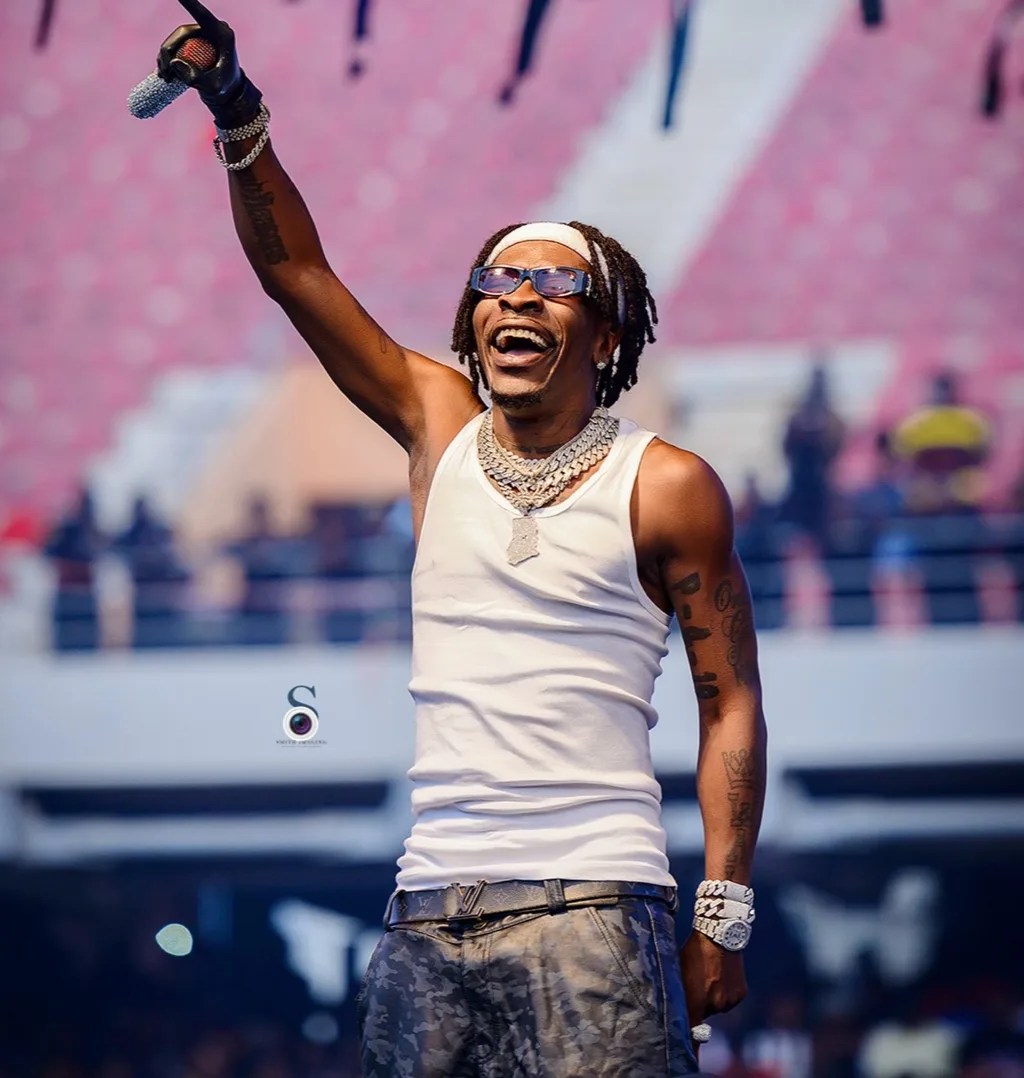
Shatta Wale has spent more than a decade claiming the title of African Dancehall King, and this 21-track solo album, released in July 2026, is the most comprehensive statement he has made in support of that claim. It moves through dancehall, Afrobeats, trap, and reggae without losing its centre, which is always his delivery: that particular combination of melodic roughness and rhythmic precision that has made him one of the most distinctive voices in Ghanaian music.
The album works as a solo project in the truest sense, with no guest artists diluting the focus. Every track is a different angle on the same thesis: that African dancehall, shaped in Accra and refined through years of live performance, is a distinct and serious contribution to global music. Whether or not you arrive as a longstanding fan, African King demands to be heard as a statement of artistic identity and one of the most significant Ghanaian releases of 2026.
These ten albums share very little beyond their quality and their origin on a continent that has been making world-class music for longer than the world was willing to acknowledge. In 2026, they are not nostalgia pieces or historical artefacts. They are living arguments about what music sounds like when it knows exactly what it is.


